

How to Correctly Apply and Integrate Facial Masks into Your Skincare Routine
Estimated reading time: 7 minutes
Key Takeaways
- Facial masks enhance skincare by delivering concentrated treatments to the skin.
- Proper application and integration of masks can significantly improve skin texture and hydration.
- Pre-mask preparation is essential for maximizing benefits.
- Consider creating a weekly masking rotation tailored to your skin’s needs.
- Incorporate masks at different points in your routine for optimal results.
Table of contents
- Understanding Facial Masks in Your Skincare Routine
- Step-by-Step Facial Mask Instructions
- Determining the Order of Facial Masks and Integrating Them into Your Skin Routine
- Pre-Mask Preparation: The Role of Exfoliation
- Creating a Comprehensive Face Routine With a Face Mask
- Practical Tips and Common Mistakes
- Conclusion and Final Recommendations
- Frequently Asked Questions
Facial masks are an indispensable part of an effective skincare regimen. They offer targeted solutions beyond what daily cleansing can achieve. Correctly integrating masks into your skincare routine ensures maximum absorption of beneficial ingredients, leading to significant improvements in skin texture, hydration, and overall appearance. This post will guide you step by step through the process, ensuring that you understand how to accurately apply and incorporate facial masks into your skin routine.
Understanding Facial Masks in Your Skincare Routine
Facial masks are concentrated treatments designed to deliver active ingredients directly to the skin’s surface over a set period. They play a vital role in any facial mask routine or face mask skin routine, addressing varied concerns like hydration, exfoliation, oil control, and elasticity.
For an in‐depth look at the variety of options, check out our comprehensive guide on Facial Mask Types here: Facial Mask Types Perfect Fit
- Cream and Gel Masks: Ideal for hydration and nourishment. Source
- Clay Masks: Perfect for exfoliating and controlling oil in oily or congested skin. Source
- Sheet Masks: Loaded with ingredients for brightening and hydration benefits. Source
- Hyaluronic Acid Masks: They hold significant water weight, hydrating the skin deeply. Source
- Collagen Masks: Boost elasticity and firmness, which is crucial with declining collagen production. Source
- Niacinamide Masks: Effectively tackle comprehensive skin concerns like pores and texture. Source
Step-by-Step Facial Mask Instructions
Pre-Mask Preparation
Proper pre-mask preparation is crucial for maximizing the benefits of your mask.
- Cleanse Thoroughly: Begin with a clean slate. Remove all makeup and wash your face. If you’re wearing makeup, consider a double cleanse with micellar water followed by your regular face wash. Source
- Exfoliate: Apply an exfoliant to remove dead skin cells and aid better absorption of the mask’s ingredients. Choose between physical scrubs and gentler chemical exfoliants depending on your skin type. For a DIY approach that complements your skincare routine, read our DIY Olive-Pomelo Facial Scrub for Smooth Skin here: DIY Olive-Pomelo Facial Scrub
- Apply Toner: Balance your skin’s pH with a quality toner. This step soothes and primes the skin for the mask. Source
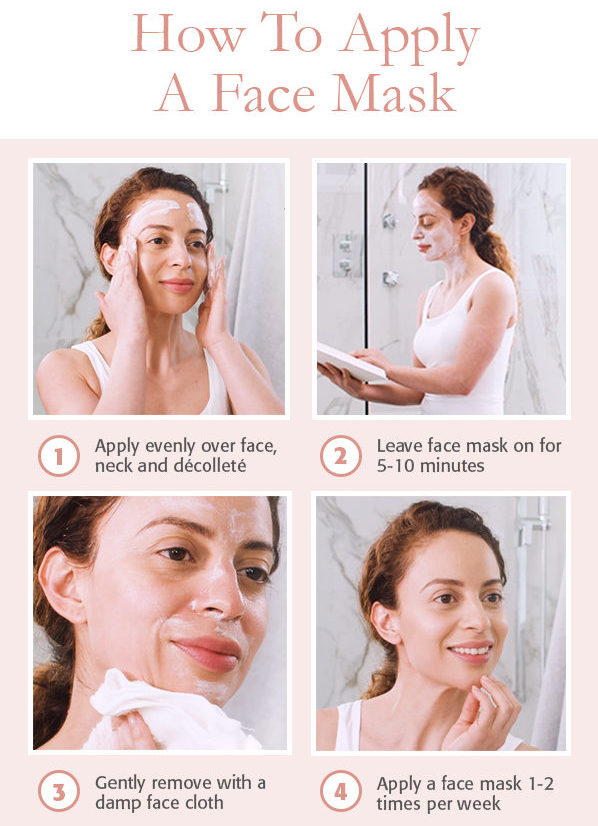
Applying the Mask
With pre-mask preparation done, it’s time to apply the mask.
- Using Clean Fingers, apply an even layer, avoiding the eyes. Extend to the neck and décolletage if needed. Source
- For Sheet Masks: Carefully fit the eye and mouth cut-outs to your face and smooth out wrinkles. Source
Timing and Duration
Tailor the frequency and duration of mask use to your skin type and mask properties.
- Cream or Clay Masks: Recommended 2-3 times weekly. Source
- Sheet Masks: Light and suitable for daily use or 2-3 times weekly. Source
Post-Mask Care
After using a mask, follow these steps for an effective face mask step in routine:
- Rinse Thoroughly: This applies to wash-off masks. For overnight masks, simply leave them on and proceed with the next steps. Source
- Apply Toner Again: Restore balance using a cotton ball soaked in toner. Source
- Moisturize: Essential after masking, as it helps seal in the mask’s benefits and prevents hydration loss. Source
Determining the Order of Facial Masks and Integrating Them into Your Skin Routine
The order of integrating the masks into your routine depends on the type.
- Rinse-off Masks: Best applied following cleansing and exfoliation, before toners. Source
- Leave-on Masks: Use them before applying overnight moisturizers. Source
- Sheet Masks: After cleansing and before other products in a morning routine. Source
For a detailed step-by-step on how to fit these practices into your daily routine, see our guide on Facial Mask Instructions here: Facial Mask Instructions Skincare Guide
Creating a Weekly Masking Rotation
Consider a strategic approach, selecting masks that cater to your skin’s various needs throughout the week.
- Monday, Wednesday, Friday: Use a K-beauty collagen mask.
- Tuesday, Thursday: Opt for an antioxidant face mask.
- Saturday: Go for a hyaluronic acid mask.
- Sunday: End with a niacinamide mask.
Alternatively, you can trial a multi-masking strategy to treat different areas of your face simultaneously—for example, applying a detox mask to the T-zone while using a hydrating mask on your cheeks and neck. Source
Pre-Mask Preparation: The Role of Exfoliation
Exfoliation is crucial—it preps the skin by removing the barrier of dead skin cells, thus ensuring the mask’s ingredients are absorbed efficiently. Choose the exfoliation technique based on your skin’s sensitivity: physical exfoliants for resilient skin, and chemical ones for sensitive skin types. Source
To further understand how key ingredients work together in a mask, you can check out our article on Understanding the Importance of Ingredients in a Face Mask for Effective Skincare here: Understanding Ingredients in Face Mask
Creating a Comprehensive Face Routine With a Face Mask
Incorporate the following steps into your face routine with a mask to achieve optimal results:
- Cleanse: Eliminate makeup and impurities.
- Exfoliate: Prepare your skin.
- Apply Toner: Restore balance.
- Apply Mask: Let the ingredients work.
- Rinse (if needed)
- Serum or Treatment: Target specific concerns.
- Moisturize: Lock in the goodness.
Timing is key: Applying masks before bedtime allows the skin to repair overnight, while morning sheet masks prepare your skin superbly for makeup application. Source
Practical Tips and Common Mistakes
Do:
- Adhere to product-specific application rules.
- Use clean hands.
- Set a timer for accuracy.
- Allow full absorption between steps.
Don’t:
- Layer products too quickly; it can lead to ineffective absorption.
- Overdo the mask duration.
- Neglect moisturizing post-mask.
Troubleshoot with patience: give ample time for lighter products like toners to absorb before moving to thicker products like serums.
Conclusion and Final Recommendations
Following precise facial mask instructions ensures you tap into the full potential of your skincare products. Experiment and adapt routines as your confidence in your skin’s needs grows. The most effective approach involves consistently using and applying masks correctly, guaranteeing that the products you invest in serve their intended purpose in your daily routine. Your skin’s transformation hinges on the care in following these steps.
For further insights into the powerful benefits of using masks and to enhance your overall skincare regimen, be sure to check out our article on Facial Mask Benefits: Everything You Need to Know for Healthier Skin here: Facial Mask Benefits Healthy Skin
For further guidance, explore additional resources on advanced techniques and product recommendations according to skin types. Happy masking!
Frequently Asked Questions
How often should I use a facial mask?
It depends on the type of mask and your skin type. Cream or clay masks are typically used 2-3 times a week, while sheet masks can often be used daily.
Can I use two different masks at the same time?
Yes, using a multi-masking strategy can help address different skin concerns across various areas of your face.
What should I do if I experience irritation?
If you experience irritation, remove the mask immediately and rinse your face with cool water. Always perform a patch test before applying any new product to prevent adverse reactions.
Can facial masks replace my normal skincare routine?
Facial masks should complement your skincare routine, not replace it. They provide additional benefits but should be used alongside cleansing, moisturizing, and treatment products.